

7 Must See Sights in Lisbon Portugal for Every Visitor
Every American traveler searching for iconic Lisbon experiences quickly discovers that over 90 percent of visitors rank the riverfront sights as their top highlight. These historic landmarks along the Tagus River showcase Portugal’s vibrant culture, breathtaking architecture, and dramatic maritime legacy in full view. From awe inspiring castles to panoramic bridges, this guide reveals how to capture Lisbon’s essence with the best riverfront perspectives and memorable panoramic vistas.
Table of Contents
Quick Summary
Takeaway | Explanation |
1. Enjoy Belém Tower from the water | Viewing this UNESCO World Heritage Site from a boat provides a unique perspective of its architectural details and historical context. |
2. Visit Jerónimos Monastery for insights | This site showcases Manueline architecture and commemorates Vasco da Gama’s voyage, revealing Portugal’s maritime heritage. |
3. Experience the Monument to the Discoveries by boat | See this tribute to explorers from the Tagus River, capturing its grandeur and historical significance. |
4. Explore Praça do Comércio at sunset | The square’s illuminated yellow buildings against the river create stunning photographic moments and connect history with modern life. |
5. Discover the 25 de Abril Bridge’s scale from the water | Viewing this engineering marvel from the river emphasizes its size and beauty, enhancing your understanding of Lisbon’s metropolitan character. |
1. Admire Belém Tower From the River
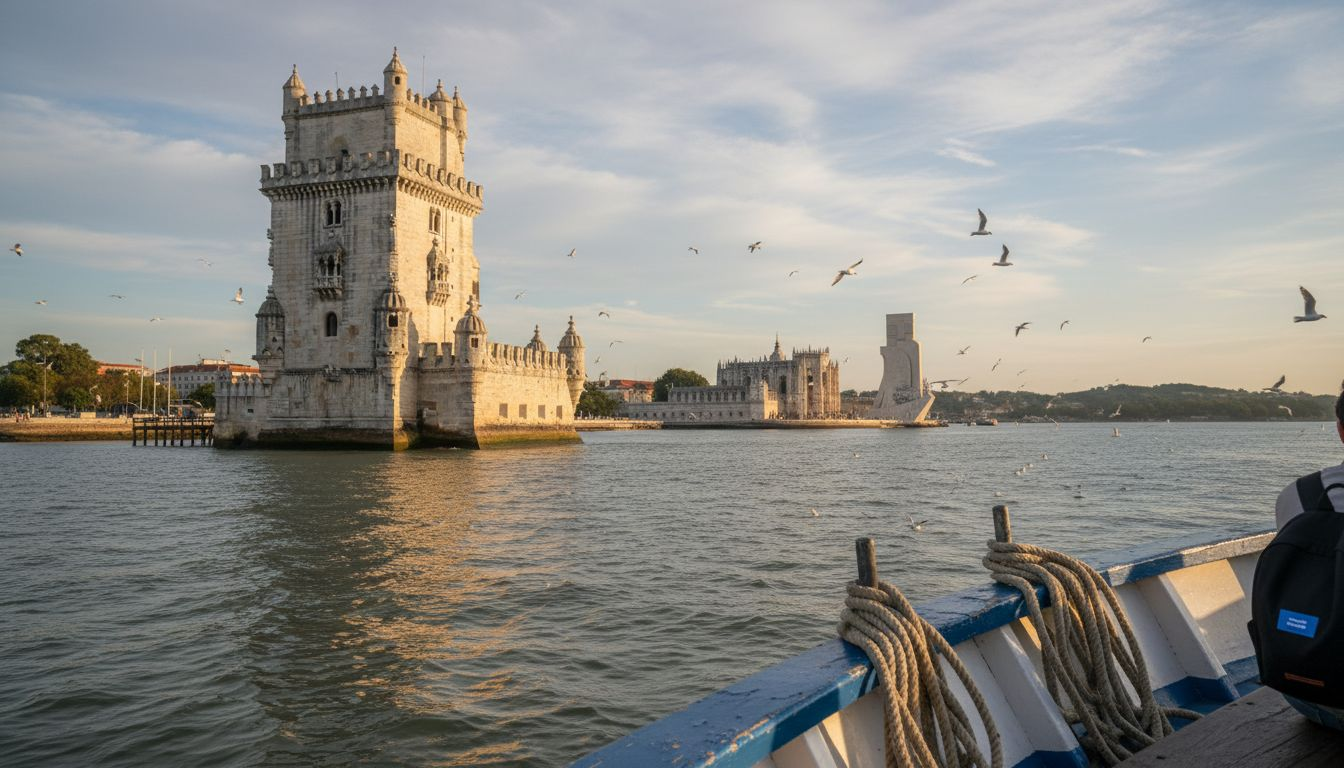
The iconic Belém Tower stands as a breathtaking symbol of Portugal’s maritime history, and viewing this architectural masterpiece from the water offers an unparalleled perspective that transforms a simple sightseeing moment into an unforgettable experience. As a UNESCO World Heritage Site, this 16th century fortress reveals its intricate architectural details and historical significance in ways impossible from land.
Constructed between 1514 and 1520, the Belém Tower represents the pinnacle of Manueline architectural style, blending maritime motifs with ornate stonework that celebrates Portugal’s Age of Exploration. From a boat, you can truly appreciate its strategic riverside location and understand how this defensive structure once guarded Lisbon’s harbor entrance.
Viewing the tower from the river allows you to see its stunning architectural features from multiple angles, including its elaborate stone balconies, intricate limestone carvings, and the impressive Venetian style windows that showcase the architectural influences of the Renaissance period. The tower’s reflection on the water creates a mesmerizing visual experience that photographers and history enthusiasts will find particularly captivating.
For an even more immersive experience, consider taking a sailing tour that highlights Lisbon’s historical coastline, which will provide expert commentary about the tower’s rich historical context while allowing you to capture stunning photographs from the water.
Pro tip: Schedule your boat tour during late afternoon when the sunlight creates dramatic shadows and highlights on the tower’s limestone facade, providing the most photogenic and memorable views of this remarkable monument.
2. Experience the Historic Jerónimos Monastery
The Jerónimos Monastery stands as a magnificent testament to Portugal’s golden age of maritime exploration, representing one of the most extraordinary architectural marvels in Lisbon. This UNESCO World Heritage Site exemplifies the stunning Manueline architectural style, with its intricate stone carvings and elaborate design that captures the maritime spirit of 16th century Portuguese culture.
Constructed over several decades and completed in 1601, the monastery commemorates Vasco da Gama’s historic voyage to India and represents the wealth and artistic prowess of Portugal during its Age of Discovery. Its massive limestone structure features incredibly detailed sculptural elements that depict maritime motifs, religious symbols, and ornate architectural details that showcase the incredible craftsmanship of Renaissance era artisans.
Visitors can explore multiple sections of the monastery, including the stunning church with its remarkable vaulted ceilings, the impressive cloisters that feature complex stonework, and the various historical exhibits that provide context about Portugal’s maritime heritage. Exploring Lisbon’s historical landmarks offers travelers a deep understanding of the city’s rich cultural narrative and architectural significance.
The monastery’s location near the Tagus River provides a perfect opportunity to understand how maritime exploration shaped Portuguese history and culture. Each architectural detail tells a story of navigation, discovery, and the incredible achievements of Portuguese explorers during the 15th and 16th centuries.
Pro tip: Purchase your entry ticket online in advance to avoid long lines and consider hiring an official guide who can provide detailed historical insights about the monastery’s architectural and cultural significance.
3. Sail by the Monument to the Discoveries
The Monument to the Discoveries stands as a breathtaking tribute to Portugal’s extraordinary maritime history, offering visitors a powerful visual narrative of the country’s golden age of exploration. Located dramatically on the northern bank of the Tagus River, this massive white limestone monument depicts numerous historical figures who played crucial roles in Portugal’s Age of Discovery during the 15th and 16th centuries.
Originally constructed in 1940 for the Portuguese World Exhibition and then rebuilt in 1960 to commemorate the 500th anniversary of Prince Henry the Navigator’s death, the monument presents a striking sailing ship silhouette with 33 significant Portuguese historical figures positioned along its edges. These figures include explorers, cartographers, kings, scientists, and other influential personalities who contributed to Portugal’s remarkable maritime achievements.
Viewing the monument from the water provides a uniquely transformative perspective that captures its full architectural grandeur and historical significance. Exploring Lisbon’s maritime legacy allows travelers to understand how this monument symbolizes the courage, innovation, and adventurous spirit of Portuguese navigators who fundamentally reshaped global exploration.
The monument’s design includes intricate sculptural details that highlight the individual contributions of each historical figure, creating a three dimensional historical narrative that celebrates human curiosity and determination. Its location on the river perfectly commemorates Portugal’s deep connection to maritime exploration and global discovery.
Pro tip: Time your boat tour during late afternoon when sunlight creates dramatic shadows across the monument, providing the most photogenic and historically evocative views of this incredible maritime tribute.
4. Marvel at Commerce Square Waterfront Views
Praça do Comércio represents the beating heart of Lisbon’s historical and architectural legacy, offering visitors an extraordinary glimpse into the city’s remarkable transformation and resilience. This expansive waterfront plaza stands as a testament to Lisbon’s ability to reinvent itself after the devastating 1755 earthquake that destroyed the original Royal Ribeira Palace, which once occupied this iconic location.
The square’s impressive architectural design features stunning yellow buildings with elegant arcades, creating a harmonious and grand entrance to the city’s downtown area. Its strategic location facing the Tagus River provides breathtaking panoramic views that connect Lisbon’s rich maritime history with its vibrant modern identity. Exploring Lisbon’s historical landscape reveals how this square symbolizes the city’s economic and cultural resilience through centuries of transformation.
From the water, visitors can fully appreciate the square’s impressive scale and architectural symmetry. The massive archway at the square’s northern end frames the city beautifully, while the surrounding buildings showcase sophisticated Portuguese architectural styles that blend historical elegance with functional design. The square has served as a critical commercial hub for centuries, reflecting Lisbon’s importance as a major maritime trading center.
Today, Praça do Comércio hosts numerous cultural events, restaurants, and museums, making it a dynamic space that connects Lisbon’s historical heritage with its contemporary energy. The square’s open design and waterfront location make it an essential stop for understanding the city’s urban development and maritime significance.
Pro tip: Visit during sunset when the golden light illuminates the yellow buildings and reflects off the Tagus River, creating a truly magical photographic moment that captures the square’s timeless beauty.
5. Get a Unique Perspective of the 25 de Abril Bridge
The 25 de Abril Bridge stands as a magnificent engineering marvel that dramatically connects Lisbon to Almada across the Tagus River, offering visitors a breathtaking visual experience that captures the city’s modern architectural spirit. Often compared to San Francisco’s Golden Gate Bridge due to its striking suspension design and iconic rust red color, this remarkable structure represents more than just a transportation route it symbolizes Lisbon’s political transformation and resilience.
Completed in 1966 during Portugal’s previous political regime, the bridge was originally named the Salazar Bridge but was renamed after the Carnation Revolution in 1974, marking a powerful moment of national liberation and democratic change. Its suspension design allows for an impressive 190 meter main span, making it one of the longest bridges of its kind in Europe and a testament to Portuguese engineering capabilities.
Discovering Lisbon’s most stunning views reveals that viewing the bridge from the water provides an unparalleled perspective that highlights its massive scale and architectural elegance. The bridge’s intricate steel cables and towering support structures create a dramatic silhouette against Lisbon’s skyline, offering photographers and architecture enthusiasts an unforgettable visual experience.
The bridge serves dual purposes as both a critical transportation infrastructure and a powerful cultural landmark, connecting the city’s southern regions and providing a stunning visual gateway between Lisbon’s historic districts and its expanding metropolitan areas. Its rust red color contrasts beautifully with the blue waters of the Tagus River, creating a photogenic landmark that captures the city’s dynamic character.
Pro tip: Time your boat tour during early morning or late afternoon when soft sunlight creates dramatic shadows and highlights across the bridge’s massive steel structure, providing the most spectacular photographic opportunities.
6. Explore the Alfama District’s Scenic Hillsides
The Alfama District represents the soul of Lisbon a mesmerizing neighborhood that survived the devastating 1755 earthquake and maintains its authentic medieval charm through narrow winding streets, stunning viewpoints, and rich cultural heritage. As the oldest district in Lisbon, Alfama offers visitors an immersive journey through centuries of Portuguese history, architecture, and tradition.
Narrow cobblestone streets climb steeply between whitewashed houses adorned with traditional ceramic tiles, creating a labyrinthine landscape that rewards adventurous explorers with unexpected panoramic views of the Tagus River and Lisbon’s historic skyline. Understanding Lisbon’s sightseeing landscape reveals how the Alfama District provides an unparalleled glimpse into the city’s architectural and cultural evolution.
The district serves as the historical heartbeat of Lisbon, home to significant landmarks such as the Saint George Castle and the Lisbon Cathedral. Its steep hillsides offer multiple miradouros viewpoints where visitors can capture breathtaking photographs and experience the unique atmosphere of traditional Portuguese urban design. The neighborhood remains renowned for its authentic Fado music venues, where melancholic traditional Portuguese music echoes through centuries old alleyways.
Alfama represents more than a tourist destination it is a living museum of Lisbon’s cultural identity. Visitors can explore local restaurants, experience traditional crafts, and immerse themselves in a neighborhood that has maintained its character through countless historical transformations.
Pro tip: Wear comfortable walking shoes with good traction when exploring Alfama, as the steep cobblestone streets can be challenging and require careful navigation.
7. Discover Christ the King Statue and Panoramic Vistas
The Christ the King statue stands as a monumental symbol of hope and historical resilience, offering visitors an extraordinary perspective on Lisbon’s stunning landscape and cultural significance. Towering 110 meters tall and inspired by Rio de Janeiro’s famous Christ the Redeemer, this remarkable monument commemorates Portugal’s miraculous survival during World War II, serving as both a spiritual landmark and an architectural marvel.
Located on the south bank of the Tagus River in Almada, the statue provides unparalleled panoramic views that capture the essence of Lisbon’s urban and natural beauty. Its strategic positioning allows visitors to witness the city’s intricate urban landscape, the shimmering river, and the surrounding maritime terrain in a single breathtaking vista. Exploring Lisbon’s most stunning views reveals how this monument represents more than just a religious symbol it is a testament to Portugal’s historical journey and resilience.
Constructed in 1959, the statue represents a powerful moment of national gratitude, symbolizing the country’s preservation during the global conflict. Its open armed design creates a welcoming gesture that seems to embrace the entire city, with intricate architectural details that reflect both religious symbolism and artistic craftsmanship.
Visitors can access an observation deck within the statue’s pedestal, which offers an immersive experience of Lisbon’s architectural and geographical landscape. The monument serves as a powerful reminder of historical context while providing a stunning visual experience that connects spiritual significance with architectural innovation.
Pro tip: Visit during sunset when the golden light illuminates the statue and creates dramatic shadows across Lisbon’s landscape, providing the most spectacular photographic opportunities.
Below is a comprehensive table summarizing the attractions and experiences related to Lisbon’s historical and cultural landmarks discussed in the article.
Attraction | Description | Pro Tips |
Belém Tower | 16th-century fortress, UNESCO World Heritage Site, best viewed from the river for architectural details and historical context. | Schedule tours in late afternoon for dramatic photographic views. |
Jerónimos Monastery | Architectural marvel of the Manueline style, commemorating Vasco da Gama’s voyage, showcasing intricate stone carvings and maritime motifs. | Purchase tickets online in advance; hire a guide for detailed insights. |
Monument to the Discoveries | Tribute to Portugal’s maritime history, showcasing 33 historical figures. Best viewed from the water for full architectural grandeur. | Visit in late afternoon to capture dramatic shadows. |
Praça do Comércio | Historical plaza reflecting Lisbon’s resilience post-1755 earthquake, offering panoramic river views and cultural events. | Visit during sunset for a magical photographic moment. |
25 de Abril Bridge | Suspension bridge symbolizing Lisbon’s political transformation, provides a magnificently engineered visual experience from the water. | Schedule tours during early morning or late afternoon for dramatic lighting effects. |
Alfama District | Historical neighborhood with medieval charm, significant landmarks, and authentic cultural experiences. | Wear comfortable shoes for exploring the steep cobblestone streets. |
Christ the King Statue | Monument offering panoramic views of Lisbon, symbolizing hope and historical resilience, providing a stunning visual and spiritual experience. | Visit at sunset for dramatic shadows and breathtaking views. |
Discover Lisbon’s Iconic Sights Like Never Before on the Water
Exploring the 7 Must See Sights in Lisbon Portugal for Every Visitor can be challenging when navigating crowded streets and limited viewpoints. You want to experience the breathtaking views of the Belém Tower, the grandeur of the Jerónimos Monastery, and the historic 25 de Abril Bridge in a way that truly captures their maritime and architectural significance. The real challenge lies in seeing these monuments from their best angles while soaking in Lisbon’s rich coastal history.
This is where our daily sailing tours come in. Our expert guides offer engaging commentary as you glide along Lisbon’s stunning historical coastline. Witness the iconic monuments like the Belém Tower from the river’s unique vantage point. Capture the perfect photo of the Monument to the Discoveries with golden afternoon sunlight reflecting on the Tagus River. Each moment delivers an emotional connection to Portugal’s Age of Exploration you simply cannot get on land.

Unlock an unforgettable adventure that combines history, beauty, and tranquility aboard one of our luxurious sailing yachts or catamarans. Whether you prefer a quick 2-hour excursion or a full-day private cruise, the best way to discover Lisbon’s treasures is by boat. Don’t miss this chance to experience Lisbon’s must-see sights from their most majestic perspective. Book your tour today at Lisbon By Boat and create memories that last a lifetime.
Frequently Asked Questions
What are the top sights to see in Lisbon?
The top sights to see in Lisbon include Belém Tower, Jerónimos Monastery, the Monument to the Discoveries, Praça do Comércio, the 25 de Abril Bridge, the Alfama District, and the Christ the King statue. Plan to visit these attractions to gain a comprehensive understanding of Lisbon’s rich history and culture.
How can I view Belém Tower from the river?
To view Belém Tower from the river, consider booking a boat tour that operates along the Tagus River. This allows you to experience the tower’s architecture and historical significance from unique angles that are not possible from land.
When is the best time to visit Praça do Comércio for photographs?
The best time to visit Praça do Comércio for photographs is during sunset when the golden light illuminates the buildings and reflects off the Tagus River. Arrive 30 minutes before sunset to capture the magical moment as it transforms the square’s ambiance.
What should I know before exploring the Alfama District?
Before exploring the Alfama District, wear comfortable walking shoes as the steep cobblestone streets can be challenging. Take your time to enjoy the narrow winding paths, lovely viewpoints, and traditional Fado music venues that are scattered throughout this historic neighborhood.
Is there an admission fee for the Jerónimos Monastery?
Yes, there is an admission fee for the Jerónimos Monastery. To avoid long lines, purchase your entry ticket online in advance, which can save you time and enhance your experience of this architectural marvel.
Recommended
Comments