

Discover Lisbon's Maritime Culture Through History and Sailing
TL;DR:
Lisbon’s maritime history remains alive through its wind-filled sails, navigation instruments, and explorer stories.
Modern tours connect visitors physically and intellectually to Portugal’s pioneering oceanic exploration and navigation.
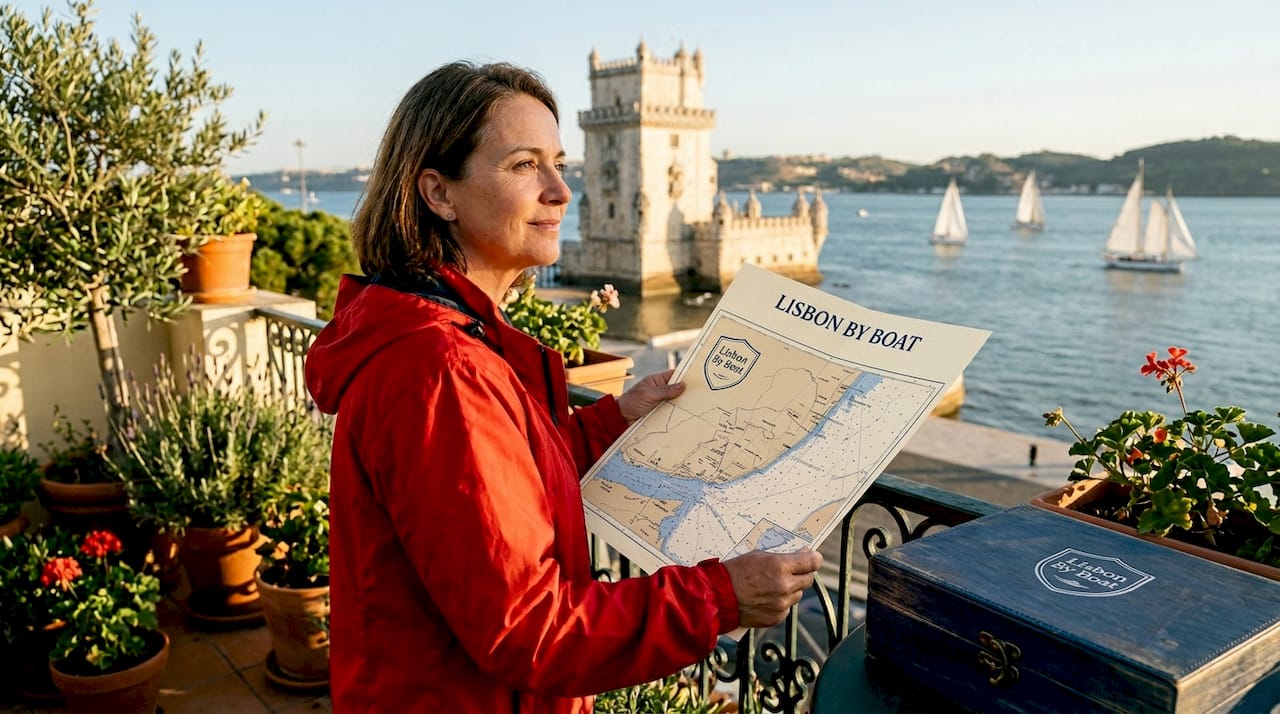
Lisbon rewards curious visitors in ways that a quick glance at its famous pastel-colored hills never fully captures. Beneath the tiles and the fado music lies something older and far more powerful: a seafaring identity that once reshaped the entire world. Most tourists pass through Belém, snap a photo of the Tower, and move on. But Portugal’s maritime culture is not a museum artifact collecting dust. It’s alive in the wind that fills a sail on the Tagus River, in the instruments that helped explorers cross oceans, and in the stories your guide tells as Lisbon’s skyline slides past the bow.
Table of Contents
Key Takeaways
Point | Details |
Maritime history is alive | Portuguese maritime culture continues to shape Lisbon’s identity and visitor experiences today. |
Hands-on exploration matters | Combining museum visits with authentic sailing tours brings Lisbon’s seafaring legacy to life. |
Innovation drove discovery | Technological and navigational breakthroughs like the caravel gave Portugal a pioneering role in world exploration. |
Modern values shape tours | Today’s maritime experiences emphasize sustainability, offering ways to connect with history responsibly. |
Understanding the roots of Portuguese maritime culture
Portugal’s relationship with the ocean was never optional. Hemmed in by Spain to the east and facing the vast Atlantic to the west, the Portuguese had one logical direction to grow: outward, across the water. This geographic reality, combined with a fierce ambition to trade and explore, made Lisbon one of the most strategically important ports in European history.
The city sits at the mouth of the Tagus River, where it opens into a wide natural harbor before meeting the Atlantic. Ships could shelter there, resupply, and set out into open water with relative ease. That positioning was not luck. It was destiny turned into deliberate policy by successive Portuguese kings who poured resources into shipbuilding, cartography, and navigation schools throughout the 14th and 15th centuries.
“Portugal’s Age of Discoveries fundamentally changed global trade routes, opening direct sea lanes to Africa, India, and the Americas that bypassed overland Silk Road alternatives.”
To understand where this ambition led, the best starting point in Lisbon is the Museu de Marinha, which showcases Portugal’s maritime history with a vast collection including navigation instruments, ship models, and centuries of naval evolution. Walking its halls, you’ll see not just objects but a narrative arc: from small coastal fishing vessels to transoceanic giants that crossed unknown seas.
Key moments in Portugal’s maritime rise include:
The systematic exploration of Africa’s western coast beginning in the 1420s under Prince Henry the Navigator
Bartolomeu Dias rounding the Cape of Good Hope in 1488, proving a sea route to Asia existed
Vasco da Gama reaching India in 1498, opening a direct spice trade route
Pedro Álvares Cabral landing in Brazil in 1500, triggering centuries of Atlantic commerce
Understanding this sequence helps you read Lisbon differently. The wealth that funded those grand monasteries in Belém came directly from the ocean. To truly feel that connection, experiencing the coastline history by boat transforms what might be a dry history lesson into something vivid and immediate. You can also explore broader context by reading up on Portugal travel destinations before your visit.
Iconic ships and groundbreaking navigation techniques
With Portugal’s heritage rooted in the ocean, the next step is to discover what set its explorers apart technologically. The short answer: they built better ships and learned to read the ocean itself.
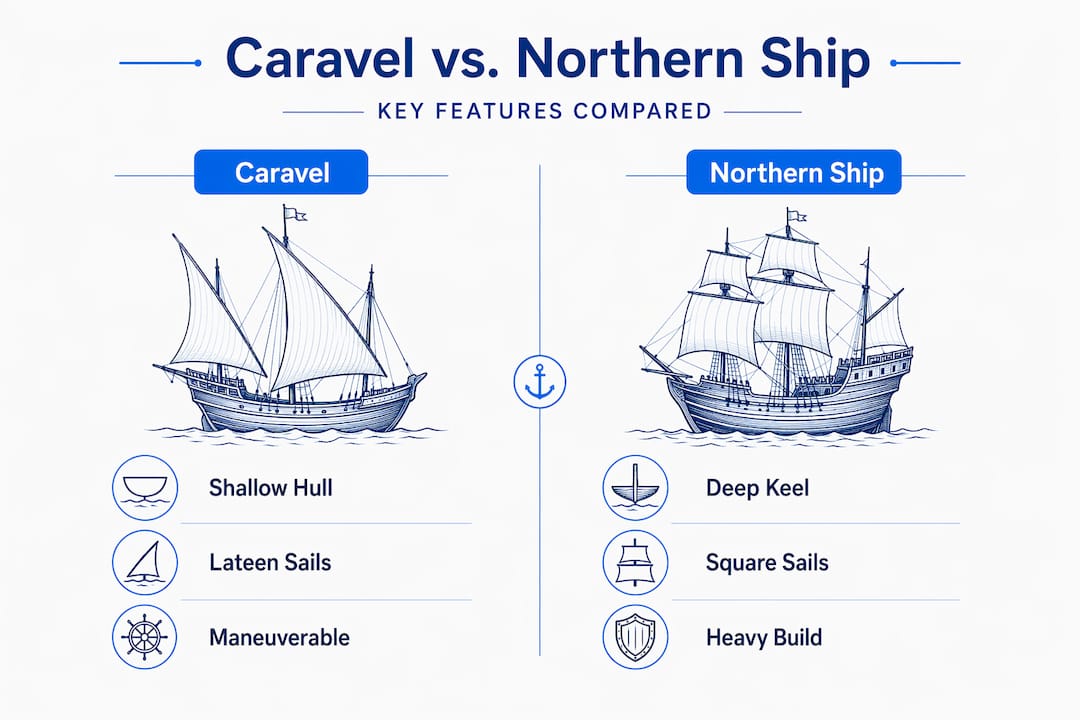
The caravel changed everything. Developed around c.1440, this Portuguese innovation was roughly 20 to 30 meters long, fitted with lateen (triangular) sails that allowed it to sail at sharper angles against the wind. Earlier vessels were largely at the mercy of prevailing winds. The caravel could tack, meaning it could zigzag into a headwind rather than wait for favorable conditions. That single capability opened thousands of miles of previously inaccessible coastline.
Here’s a direct comparison that shows just how significant the caravel was:
Feature | Traditional northern ship | Portuguese caravel |
Hull shape | Deep, heavy keel | Shallow, narrow draught |
Sail type | Square sails only | Lateen and square combined |
Wind flexibility | Limited to following winds | Could sail against the wind |
Crew size | Large crews required | Operated with smaller teams |
Exploration range | Coastal and familiar routes | Open ocean, unknown coastlines |
Cargo capacity | High capacity, low agility | Moderate capacity, high agility |
Beyond the ship itself, Portuguese navigators developed or refined a toolkit of instruments that made long-distance ocean navigation possible. Navigation techniques included the compass for direction, the astrolabe and quadrant for measuring latitude from the sun or stars, and nautical charts that evolved from basic portolan maps (coastal charts drawn by sailors) into increasingly precise tools for crossing open water.
Here’s how a typical 15th-century Portuguese explorer would have prepared for and executed a long voyage:
Study existing portolan charts and update them with reports from earlier voyages
Use astronomical tables to predict the position of the sun and stars at different latitudes
Calculate the ship’s latitude daily using the quadrant or astrolabe
Track direction continuously with the magnetic compass
Estimate speed and distance using a log line (a weighted rope thrown overboard)
Record new coastlines, depths, and hazards to improve future charts
Pro Tip: When visiting the Navy Museum, ask specifically to see the navigation instrument collection. The astrolabes on display are not replicas; they are actual objects that crossed real oceans. Holding that context in mind as you look at them makes the experience far more powerful than reading a label alone.
Exploring Lisbon’s maritime soul from the water gives you a direct, physical sense of why these innovations mattered. And if you want to understand what sailing a traditional-style vessel feels like versus a modern yacht, reading about sailboat tours explained gives you useful context before you book.
How to experience Portuguese maritime culture in Lisbon today
Now that you know how Portugal reshaped seafaring, here’s how you can personally immerse yourself in its ongoing maritime culture. Lisbon has done something smart: it has clustered most of its maritime heritage into the Belém district, which means you can absorb a remarkable amount of history in a single afternoon, then cap it with a sailing experience on the same stretch of water the explorers used.
The Belém area contains the Navy Museum, the Monument to the Discoveries, the Tower of Belém, and direct riverside access to the Tagus. Combining a Navy Museum visit with a private sunset sail for immersive history is one of the most efficient and memorable ways to spend a day in Lisbon. You move from studying the past inside the museum to feeling it physically on the water within the same few hours.
Here’s a practical breakdown of tour options available in Lisbon:
Tour type | Duration | Group size | Typical price range | Best for |
Shared sailing tour | 2 hours | Up to 12 people | €30 to €50 per person | Budget-conscious travelers |
Private sailing tour | 2 to 4 hours | 2 to 8 people | €200 to €500 total | Couples, small groups |
Private catamaran charter | Half to full day | Up to 12 people | €500 to €1,200 total | Families, celebrations |
Luxury yacht charter | Full day | 2 to 10 people | €1,000 and up | Premium, custom experience |
When choosing a sailing excursion for genuine cultural value, look for:
Guides who speak to the historical significance of the monuments you pass, not just their names
Routes that take you past Belém Tower and the Monument to the Discoveries from the water
Operators who use traditional sailing rigs rather than purely motor-driven vessels
Small group or private options that allow you to ask questions and adjust the pace
Pro Tip: Book your sailing tour for late afternoon if you can. The light along the Tagus turns golden in the final two hours before sunset, and the monuments in Belém look completely different from the water at that hour than they do from shore. Combine that with a knowledgeable guide and you get both a visual and an intellectual experience simultaneously.
For inspiration on timing and atmosphere, the Lisbon sunset sailing tours guide covers the romantic and cultural appeal in detail, while unique coastal sailing adventures walks you through what to expect on longer excursions.
Sustainability and the evolving meaning of maritime exploration
Having explored hands-on ways to connect with maritime traditions, let’s consider how modern values are reshaping the meaning of exploration on Lisbon’s waters. Portugal’s Age of Discoveries was extraordinary in technological terms. But it was also built on conquest, forced labor, and environmental extraction on a massive scale. Modern maritime culture in Lisbon is grappling honestly with that legacy, and that tension is itself worth understanding.
The lateen sail that enabled tacking against winds for African coast exploration was a technological triumph. Today, that same principle of wind power is being reconsidered as a sustainable alternative to fossil fuel-driven vessels. The irony is striking: the technology that enabled one of history’s most ecologically disruptive eras of expansion is now being studied as a cleaner future for ocean travel.
“The shift from conquest-driven exploration to conservation-minded navigation represents one of the most meaningful evolutions in maritime culture over the past century.”
Eco-conscious travelers can engage with this evolution practically:
Choose sailing tours that use wind power rather than motorized vessels as the primary mode of movement
Ask tour operators about their waste management and fuel policies before booking
Visit the riverside natural reserves around the Tagus estuary, one of Europe’s most important wetland bird habitats
Support local operators who reinvest in the community rather than large commercial cruise operators
Honoring maritime culture responsibly also means engaging with its full history, including its difficult chapters. Some of Lisbon’s best cultural guides will speak frankly about the slave trade, the colonial system, and how Portugal is reckoning with that past today. Choosing tours that include this fuller narrative rather than just the triumphant highlights shows respect for the cultures that were affected by Portuguese expansion.
For a deeper look at why sailing in Lisbon is meaningful beyond just recreation, the piece on why sail in Lisbon explores both the practical and emotional dimensions of getting on the water here.
What most travelers miss about Lisbon’s maritime legacy
Standing on the deck of a sailboat as Lisbon’s waterfront opens up before you, there’s a temptation to treat the experience as purely visual. The monuments look spectacular from the water. The light is extraordinary. The photographs will be excellent.
But here’s what we’ve noticed over years of guiding people along this coastline: the visitors who come away transformed are not the ones with the best camera angles. They’re the ones who asked a question they weren’t expecting to ask. “Why is the Tower of Belém positioned there, in the middle of the water?” Or: “What did a sailor eat for four months crossing the Atlantic?” Those questions crack open a level of curiosity that no guidebook fully satisfies.
Most travelers engage with maritime heritage as a backdrop. They absorb the visual grandeur and move on. What they miss is the system that made it all possible: the centuries of accumulated knowledge, the institutional investment in navigation schools, the willingness to send ships into genuinely unknown water based on incomplete but improving information. That combination of discipline, courage, and intellectual rigor is what made Portugal’s maritime era extraordinary.
The hands-on blending of centuries-old innovation with present-day stewardship is what makes sailing in Lisbon genuinely different from sailing somewhere else. You are not just on a boat. You are on a river that has seen more history than almost any waterway in the world, guided past monuments built specifically to honor the people who sailed it before you.
Digging deeper, by asking your guide about the caravel’s design, or about what the Monument to the Discoveries actually commemorates, or about how modern navigators are honoring and critiquing that legacy, transforms a pleasant two-hour cruise into something you’ll still be thinking about years later. The ultimate sunset cruises page captures some of that experiential quality if you want to preview what thoughtful engagement with this coastline looks like.
Discover Lisbon’s maritime culture with a private sailing experience
If you’re ready to see and truly feel Lisbon’s maritime legacy for yourself, here’s how to start your journey on the water.
At Lisbon by Boat, we design our tours around exactly the kind of deep, curious engagement this article has been building toward. Sailing in Lisbon isn’t just about the views. It’s about stepping into Portugal’s living history with someone alongside you who can bring it to life. Whether you’re looking for a shared two-hour sunset sail or a fully private full-day charter on a luxury yacht, we offer options that match your pace, group size, and appetite for adventure. Our luxury yacht tours cater to those who want to experience the Tagus in comfort and style, while our private yacht charters give you complete flexibility to shape your own maritime story. Book with us and bring this history home.
Frequently asked questions
What is the best way to experience Portuguese maritime culture in Lisbon?
Combining a Navy Museum visit with a private sunset sail offers both historical depth and hands-on exploration, letting you study the story and then physically inhabit it within the same day.
Why were Portuguese caravels so important for global exploration?
The caravel, developed c.1440, was lightweight, maneuverable, and capable of sailing against the wind, which allowed explorers to chart unknown coasts and open previously inaccessible trade routes.
Are there eco-friendly boat tours in Lisbon for tourists?
Yes, Lisbon offers sailing experiences that prioritize wind power over motorized propulsion. Modern sustainability in cruises represents a meaningful shift from the expansionist model that originally drove Portuguese maritime development.
What navigation tools did Portuguese explorers use during the Age of Discoveries?
Navigation techniques included the compass, astrolabe, and quadrant for determining latitude, alongside portolan nautical charts that were continuously updated as explorers mapped new coastlines.
Recommended
Comments