

Why waterborne sightseeing in Lisbon is surprisingly effective

TL;DR:
Waterborne sightseeing in Lisbon leverages multisensory blue spaces that reduce stress and enhance memory retention. Such tours maximize water exposure, sensory engagement, and shared social experiences, making them more impactful than land-based options. Responsible operators and personalized options ensure sustainability and broad appeal for all traveler types.
Most people assume that sightseeing is inherently exhausting. You navigate crowded streets, check your map every two minutes, battle foot traffic at popular monuments, and arrive back at the hotel mentally drained rather than enriched. Then you step onto a boat in Lisbon, and something shifts completely. Within minutes, the noise fades, the pace slows, and your brain actually starts processing what you’re seeing. That contrast is not accidental. The science behind waterborne sightseeing reveals a sophisticated mix of sensory, psychological, and cognitive factors that make river tours far more rewarding than most visitors anticipate.
Table of Contents
Key Takeaways
Point | Details |
Blue spaces promote well-being | Water-dominated environments like Lisbon’s Tagus River have proven mental and physiological benefits for visitors. |
Multisensory sightseeing excels | Boating combines visual, sound, and tactile experiences for maximum relaxation and memory-making. |
Landmark views are unmatched | Lisbon’s top landmarks are best seen from the water, with guided narration making history vivid without the rush. |
Personalization and sustainability matter | Tailoring boat tours and practicing responsible tourism enhances enjoyment and preserves the river environment. |
The science behind ‘blue spaces’ and urban well-being
Let’s start with the foundation. Researchers use the term “blue spaces” to describe water-dominated environments, ranging from ocean coastlines and urban rivers to fountains and lakeside parks. These environments have a measurably different effect on the human brain compared to green spaces or built urban areas.
Blue spaces are associated with reduced stress responses, improved relaxation, and better cardiovascular markers during exposure. These are not anecdotal claims. Studies tracking physiological indicators like heart rate variability and cortisol levels consistently show that time near water produces calmer, more restorative states than equivalent time spent in urban environments without water features.
What makes this genuinely interesting is the multisensory dimension. Researchers using structural equation modeling have found that multisensory stimuli in blue spaces, including visual, auditory, and tactile inputs, significantly enhance landscape perception and overall well-being scores in study participants. It is not just the sight of the water that matters. The sound of gentle waves against a hull, the slight movement beneath your feet, the cooler air temperature near a river surface: all of these inputs combine to produce a broader restorative effect.
“Blue space exposure consistently reduces psychological stress markers and improves self-reported well-being, with effects that are measurable after relatively short durations of exposure.” — Mental Health Commission research summary
Key factors that influence the blue-space effect on tourists include:
Factor | Low-impact scenario | High-impact scenario |
Proximity to water | Viewing from a shore path | On the water itself |
Duration of exposure | Brief glance during walking tour | 2-hour sailing experience |
Sensory engagement | Visual only | Visual, auditory, and tactile |
Cognitive demand | Navigating routes, reading maps | Sitting, guided interpretation |
Social setting | Solo, anonymous crowd | Shared group experience |
This table matters because it explains exactly why being on the water, not just near it, produces a qualitatively different experience. Sailing on river cruises in Lisbon maximizes almost every high-impact factor simultaneously. You are surrounded by water from all sides, engaged on multiple sensory channels, and your cognitive demand is reduced to near zero because the route, the narration, and the logistics are all handled for you.
How waterborne sightseeing creates memorable experiences
With the science established, it becomes much easier to understand why guests so often describe boat tours as the highlight of their entire trip, even when the tour itself only lasts two hours.
The calming effect sets in faster than most passengers expect. Within ten to fifteen minutes on the Tagus River, the visual noise of the city is replaced by an open horizon, the gentle sound of water, and a natural rhythm that your nervous system finds deeply familiar. Your body interprets this environment as low-threat and restful. Attention broadens rather than narrows, which is precisely the mental state that helps information stick and creates lasting memories.
Waterborne sightseeing reduces everyday cognitive demands in ways that land-based tours simply cannot replicate. When you are walking through a city, your brain is simultaneously managing navigation, pedestrian avoidance, traffic awareness, and physical fatigue. None of that is happening on a boat. Your entire mental bandwidth is freed up for the experience itself.
Here is a direct comparison to make this concrete:
Feature | Boat tour | Walking tour |
Physical effort | Minimal | High |
Navigation stress | None | Constant |
Sensory overload risk | Low | High |
Landmark viewpoint | Wide, unobstructed | Street-level, partial |
Commentary delivery | Structured, paced | Variable, rushed |
Group cohesion | Shared space, natural bonding | Spread out, dispersed |
Weather comfort | Sheltered deck options | Fully exposed |

The social dimension deserves particular attention. Group travel is most satisfying when people share a contained, pleasant environment that encourages conversation without requiring effort. A boat does exactly that. There is no need to shout over traffic or wait for stragglers at every corner. Everyone is together, relaxed, and experiencing the same view at the same moment. This shared context is particularly valuable for corporate groups, families, and organized tour parties.
Practical ways to maximize your boat tour experience:
Book morning departures for softer light and calmer water conditions
Choose tours with live commentary rather than audio-only guides for richer interaction
Sit on the open deck whenever possible to maximize sensory engagement
Bring a light layer regardless of season, since river air is consistently cooler
Take time between landmark sightings to simply watch the water, without photographing
Pro Tip: If you are traveling with a mixed group of introverts and social travelers, look for boats that offer both open social decks and quieter seating areas. This small structural detail makes a significant difference in group satisfaction. You can explore the benefits of boat tours and the unique perspectives of boat tours to match the format to your group’s personality.
Waterborne sightseeing in Lisbon: Landmarks, history, and unique perspectives
Now let’s get specific about Lisbon, because the city’s geography makes waterborne sightseeing particularly well-suited here in ways that not every destination can claim.
The Tagus River is wide, calm, and historically central to Lisbon’s identity. For centuries, this was the artery through which explorers departed and returned, through which trade goods flowed, and around which the city’s most significant monuments were built. Viewing those monuments from the water is not just a scenic choice. It is the historically accurate perspective.
Top landmarks visible from the Tagus that gain new meaning from the water:
Torre de Belém (Belem Tower) — Built on the riverbank in the 16th century as a defensive fortification and ceremonial gateway, this tower was designed to be seen from the water by arriving ships. Seeing it from the river is experiencing it as it was intended.
Padrão dos Descobrimentos (Monument to the Discoveries) — This massive riverside monument celebrates Portugal’s Age of Exploration. Standing at river level, its scale becomes genuinely impressive.
Mosteiro dos Jerónimos (Jerónimos Monastery) — Visible from the water, this UNESCO World Heritage Site frames the western Belém shoreline in extraordinary Manueline architecture.
Praça do Comércio (Commerce Square) — Lisbon’s grand riverside plaza, historically known as the “gateway to Lisbon,” faces the Tagus directly and is best appreciated from the water.
Ponte 25 de Abril (April 25th Bridge) — Passing beneath this iconic suspension bridge is genuinely thrilling. Its scale is impossible to grasp from land.
Cristo Rei (Christ the King) — The statue across the river stands dramatically above the southern bank and provides a constant visual anchor throughout the tour.
Waterborne Tagus sightseeing works particularly well because it provides landmark visibility and historical context simultaneously, especially when live interpretation is included. A knowledgeable guide can explain why Belem Tower sits where it does, what the tide patterns meant for Portuguese explorers, and how each monument relates to the era that created it. That layer of meaning transforms a scenic trip into a genuinely educational one.
Exploring Lisbon’s stunning coastline from the water also reveals a surprising amount of architectural detail that is simply invisible from street level. Rooftop terraces, fortress walls, ancient city gates, and riverside promenades all appear with startling clarity when viewed from the Tagus. You can also learn more about the river itself through detailed Tagus River facts that give historical depth to everything you see.
Statistic callout: In recent visitor satisfaction surveys, guests who combined a boat tour with their Lisbon visit rated their overall trip experience significantly higher than those who relied exclusively on walking or bus tours, with boat tour participants more frequently describing specific landmarks and stories they remembered clearly after returning home.
Nuances and challenges: Personal preferences and environmental sustainability
Waterborne sightseeing is genuinely remarkable, but it would be incomplete to present it without important caveats. The experience is not equally rewarding for every traveler, and the growing popularity of river tourism creates real environmental responsibilities.

Individual response to blue-space environments varies considerably. Research confirms that visitors respond differently based on personal preferences, engagement style, cultural background, and prior experience with water-based activities. Someone who feels anxious on boats will not experience the same restorative calm as someone who is completely comfortable. Similarly, travelers who prefer high-activity, exploratory sightseeing may find the contained format of a cruise less stimulating than a walking tour that allows spontaneous detours.
Operators play a significant role in widening that appeal. Well-designed tours can accommodate different visitor types by offering:
Quiet observation zones for those who want to absorb the experience without social interaction
Interactive question-and-answer segments for curious, engaged learners
Flexible duration options ranging from short 2-hour cruises to full-day private charters
Accessibility accommodations for travelers with mobility considerations
Photography-friendly positioning at key landmarks
The sustainability question is equally serious. Excessive visitation creates measurable environmental pressure on marine ecosystems and can reduce the enjoyment of the very experiences tourists seek. When boat traffic becomes too dense, water quality suffers, wildlife is disturbed, and the calming qualities that make these tours special begin to erode.
Pro Tip: When choosing a boat tour operator in Lisbon, ask directly about their environmental practices. Look for operators who limit passenger numbers, maintain proper waste management at sea, use fuel-efficient vessels, and actively support local conservation efforts. These daily boat tours tips can help you identify what separates a thoughtfully run operation from one simply chasing volume.
Responsible tourism is not just ethically correct. It is also self-interested. The more carefully managed these tours are, the better the experience remains for future visitors, and for the Tagus ecosystem that makes Lisbon’s waterfront so compelling in the first place.
Why waterborne sightseeing works better than most people expect
Here is our honest editorial view after years of running tours on the Tagus: most visitors dramatically underestimate what a boat tour delivers, and they do so for the wrong reasons.
People tend to evaluate sightseeing options based on how many things they will see. More stops, more landmarks, more ground covered. By that metric, a two-hour boat tour sounds modest compared to a full-day walking itinerary. But that framing misses everything important.
The real value of a waterborne tour is not the quantity of sights. It is the quality of absorption. When your nervous system is calm, your cognitive load is low, and your sensory environment is genuinely restorative, you actually retain more. Guests who have taken our tours frequently tell us months later exactly what our guide said about Belem Tower or the April 25th Bridge. That kind of memory retention does not happen when people are tired, overstimulated, and navigating crowded streets.
Corporate groups, in particular, gain something that no conference room activity replicates. Shared physical space on water, with a common visual experience and no exit route, creates the conditions for genuine connection. People talk differently on a boat than they do at a dinner table. The relaxed environment lowers social defenses, and the shared experience gives everyone an immediate common reference point. Unforgettable Lisbon boat tours work especially well for team-building precisely because the format does the bonding work without forcing it.
We also think the sustainability challenge is an opportunity, not just a constraint. Operators who invest in limiting numbers, improving vessel efficiency, and deepening interpretive quality will consistently outperform those who chase volume. The future of river tourism in Lisbon depends on keeping the Tagus beautiful, the experience intimate, and the storytelling rich. Those are not in conflict with each other. They are the same goal.
Discover Lisbon by boat: Start your unforgettable river journey
Ready to experience the science and serenity of waterborne sightseeing for yourself?
Everything this article has covered, the blue-space effect, the reduced cognitive load, the historically grounded landmark views, and the memorable social experience, comes alive the moment you board. Whether you are a solo traveler, a family, or a corporate team looking for a genuinely different kind of gathering, Lisbon’s Tagus River delivers.
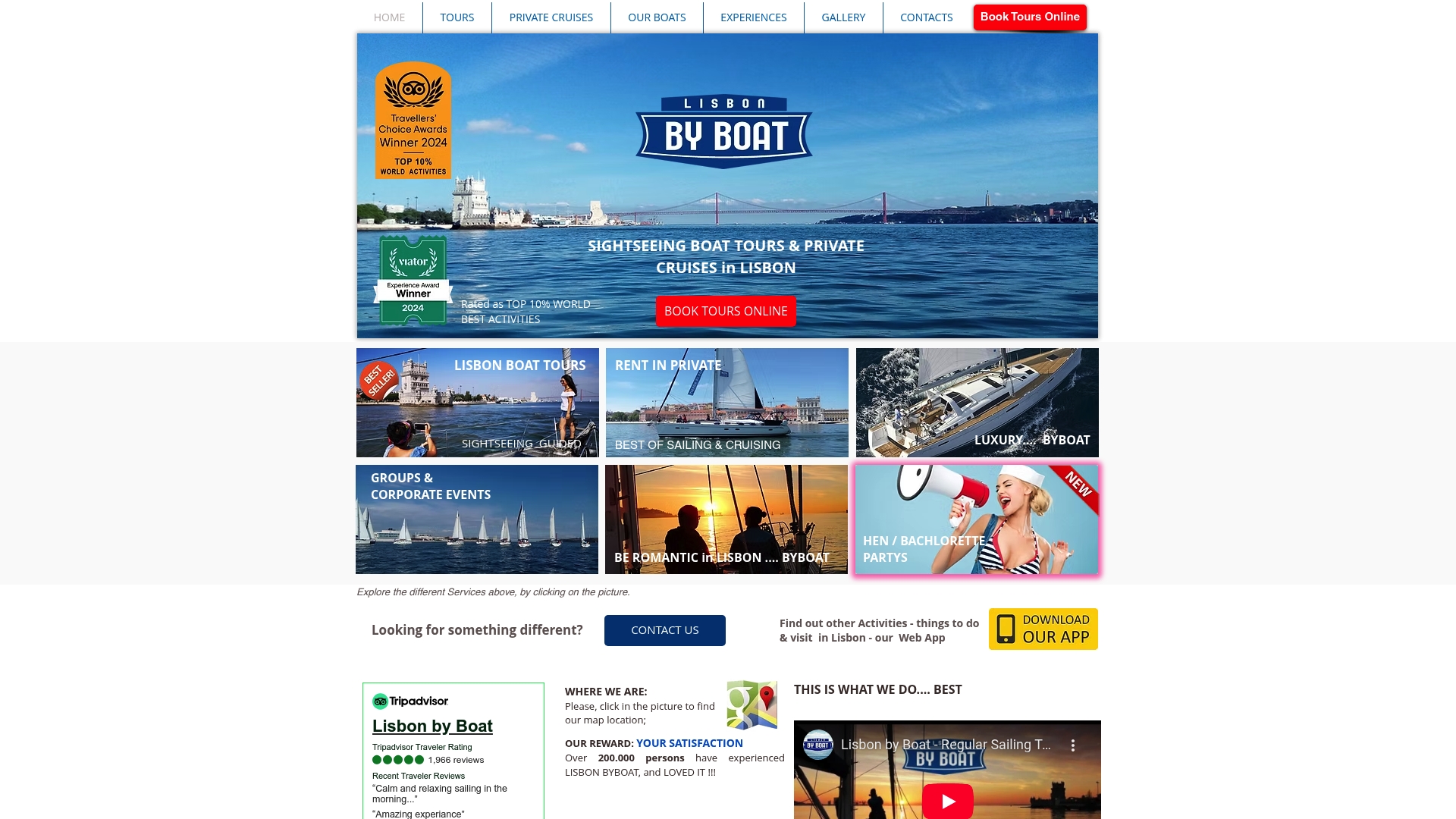
We offer daily 2-hour sailing tours along Lisbon’s historic coastline, with expert guides who bring every monument to life. For groups and private travelers, our luxury yachts in Lisbon and catamarans are available for private charters ranging from two hours to a full day. Browse all options and reserve your spot through our guided ByBoat tours page. The Tagus is waiting, and it looks best from the water.
Frequently asked questions
What are blue spaces and why do they affect well-being?
Blue spaces are water-dominated environments linked to measurable reductions in stress and improvements in relaxation, with multisensory exposure to water producing beneficial physiological and psychological effects that science has consistently documented.
How does a boat tour in Lisbon compare to walking tours for sightseeing?
Boat tours provide unobstructed landmark visibility and structured historical commentary with minimal physical effort, allowing you to absorb more context and retain more of what you experience compared to a walking tour.
Do all travelers benefit equally from waterborne sightseeing?
No. Visitor responses vary based on personal preferences, comfort with water, engagement style, and cultural background, which is why well-designed tours offer flexible formats to accommodate different types of travelers.
Is waterborne sightseeing environmentally sustainable?
It can be, but over-visitation creates real pressure on marine environments and can degrade the experience itself, making it essential to choose operators who actively manage passenger limits and environmental impact.
Recommended
Comments